Those who can, teach: Growing the GP workforce
If we are serious about strengthening general practice and making it sustainable for the future, we must be serious about teaching.
We know we need to increase the number of GPs working in urban and rural New Zealand communities. Patient demand is rising, complexity is increasing, and the current pipeline simply isn’t wide enough. While we continue to advocate and push for action at the highest levels, let’s also look at ways we can grow the pipeline that already sits within our control – being a teaching practice.
With places at the Auckland and Otago medical schools increasing each year, some students are spending parts of their training in virtual group-based discussions, rather than being able to immerse themselves in a practice. While these models do add value to their training, they are not a long-term substitute for the lived, first-hand experience of being part of a functioning general practice team.
With the New Zealand Graduate School of Medicine at Waikato University opening in the next couple of years, this brings real opportunity – and real urgency. Without enough teaching practices, especially in the wider Waikato region who are willing and able to host these students, those opportunities will be lost.
We also have new and evolving pathways with PGY2 placements into general practice and streamlined processes for overseas-trained doctors wanting to work in Aotearoa who also seek learning opportunities in our practices.
Our objective is clear. To attract, recruit and retain doctors in general practice. However, to make this a reality, we need more practices willing to teach – especially in areas outside the main cities and towns.
If we flip the narrative about teaching and see it as a way to build capacity, not something we do only when we have capacity, then we can start to reap the benefits. That said, I acknowledge that teaching is not an option for all GPs and practices.
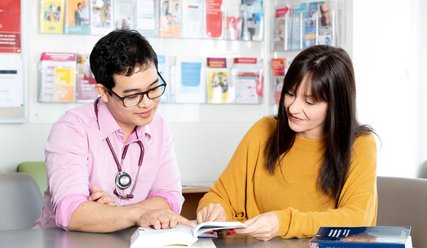
However, practices that engage in teaching by hosting medical students, PGYs and GPEP1 registrars aren’t just training doctors – you are creating culture. You get the opportunity to showcase what is best about general practice: continuity, relationships, clinical and knowledge scope, teamwork and community connection.
In doing so, those you are teaching learn clinical skills and, more importantly, the values of general practice and primary care. They see how multi-disciplinary teams work together to manage uncertainty, complex care and patient care, and they see how rewarding this work can be.
And fingers crossed, it means they choose to stay in general practice.
Within my own practice, I’ve seen how teaching has directly shaped our workforce.
We now have three former PGY2 doctors who have returned as senior registrars or Fellows. One former PGY2 and four past registrars are now partners in the practice. We have a doctor who came through NZREX now working full time with us, and two doctors who came to us from the hospital “just to try general practice”, with one now a Fellow and the other our newest GPEP1 registrar.
This happened because we said yes to hosting learners early, often and repeatedly. We planned how we could invest time, supervision and trust, and in return, we built a sustainable, committed clinical team that has also strengthened the supply line for general practice.
So, here is a challenge: if you don’t teach, ask yourself why not?
Is it space, time, funding, supervision load? Could you take just one additional PGY2 or medical student who can help to spread the load?
I am interested in hearing from the members about the real barriers. We need to know what would make teaching exciting, sustainable, worthwhile and realistic for your practice. Without that feedback, and without your teaching and passing on all your knowledge, we cannot grow the workforce that we know we need.
Teaching cannot be an optional extra. It’s how we show that we are doing our part to protect our profession, communities and patients. If we want more GPs, rural hospital doctors and dual-trained Fellows, we need to open our doors, share our knowledge and keep reemphasising how good general practice can be.
This column was published in NZ Doctor on 24 February 2026.